RV dealers
New units in from the factory, inventory swaps between lots, or a sold unit delivered to a buyer in another state.
One private RV? See RV transportFor dealers, manufacturers & fleets
What is power only?
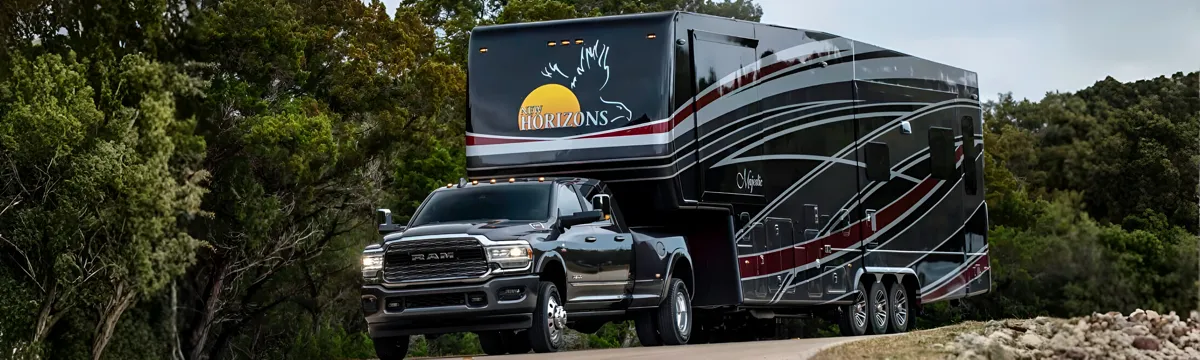
Power only trucking means the carrier supplies the truck and a licensed driver, and you supply the trailer. Best Friend Transport is a direct power only carrier: our own trucks and drivers hook up to your trailer and deliver it across the lower 48.
Lower 48
coverage
24/7
dispatch, EN / ES
1 contact
per load or program
Who it's for
You already have the trailer. What you don't have is a truck and a driver free to move it today. We fill that gap.
New units in from the factory, inventory swaps between lots, or a sold unit delivered to a buyer in another state.
One private RV? See RV transportFactory-to-dealer delivery of travel trailers, fifth wheels, cargo and utility trailers. Recurring runs set up as a program.
How we hitch a fifth wheelEquipment, cargo and specialty trailers repositioned between branches, or a surge of trucks for peak season.
Branch-to-branch · seasonal surgeRestroom and shower trailers moving between events, job sites and emergency staging areas.
Full deployments: Disaster reliefOwn trailers, no spare drivers?Power only adds capacity without hiring or buying another truck.
How it works
Which one fits depends on whether your trailer is ready when the truck arrives.
The trailer is loaded and waiting. Our driver inspects it with your yard staff, hooks up and leaves. At delivery we drop it at the agreed spot without waiting for unloading.
The trailer is loaded, or unloaded, while our driver waits. Common when it has to leave the same day or the receiver has no room to keep it.
Real numbers, not a sales pitch
Real moves · February 2025 – October 2026
$2.55/mi
median rate per mile
$1,200
median per move
508 mi
median distance
1,803
completed moves in the sample
Real power only moves we hauled betweenFebruary 2025 – October 2026: empty trailers, restroom trailers, generators and similar, not counting RVs. This is not a quote.Price depends on distance, trailer type and weight, equipment and how flexible your pickup window is; detention terms come in writing with your firm price before dispatch.
Advantages and limits
Before we hook up
If something is missing, we tell you before the truck rolls so nobody wastes a trip.
The full guide
Power only trucking is a freight service where the carrier supplies only the truck and a licensed driver, and you supply the trailer. The carrier hooks up to your loaded or empty trailer, hauls it to its destination and drops it. You keep ownership of the equipment; we provide the power.
That is the whole idea. You already have the trailer. Maybe it is the product you are selling, maybe it is a fleet you rent out, maybe it is a loaded trailer that needs to reach a customer. What you don’t have is a truck and a driver free to move it today. A power only carrier fills that gap.
Best Friend Transport runs power only as a direct carrier. The truck is ours, the driver is ours, and one dispatcher handles your load from the first call to the delivery photos. We don’t sell your trailer move to another company. The quote is the price.
There are two common ways to run a power only load. Which one fits depends on whether your trailer is ready when the truck arrives.
The trailer is loaded and waiting. Our driver arrives, inspects it with you or your yard staff, hooks up and leaves. At the other end the driver drops the trailer at the agreed spot and leaves without waiting for it to be unloaded.
Drop-and-hook is the fastest, most predictable option. There is no waiting at the dock, so pickup windows are tighter and pricing is simpler. It works best for shippers with a yard or a lot where trailers can sit.
The trailer is loaded, or unloaded, while our driver waits. This is common when the trailer has to leave the same day it is loaded, or when the receiver has no room to keep it.
Live loads are fine, but they need clear timing. Long waits at the dock tie up a truck and a driver, so we agree up front on free time and what happens after that: [CONFIRMAR: tiempo libre incluido y cargo por detención].
Power only fits any business where the trailer, not the cargo, is the thing that needs to move.
Power only is a useful tool, not a fix for everything. Here is the honest version.
What we can pull depends on the truck assigned and the trailer’s hitch, weight and length. Here is how we sort requests today:
| Trailer type | Hitch | Can we pull it? |
|---|---|---|
| Travel trailers and toy haulers | Ball / bumper pull | [CONFIRMAR: sí/no y límites de peso y largo] |
| Fifth wheels | Fifth wheel / kingpin | [CONFIRMAR: sí/no y límites de peso y largo] |
| Restroom and shower trailers | Ball or gooseneck | [CONFIRMAR: sí/no y límites] |
| Cargo, enclosed and utility trailers | Ball or gooseneck | [CONFIRMAR: sí/no y límites] |
| Equipment and flatbed trailers | Gooseneck or pintle | [CONFIRMAR: sí/no y límites] |
| Boat trailers (loaded) | Ball | [CONFIRMAR: sí/no y límites] |
| 53-ft dry vans, reefers, semi flatbeds | Kingpin (semi tractor) | [CONFIRMAR: si se cuenta con tractor] |
Our trucks: [CONFIRMAR: equipo — hotshot/gooseneck/dually/tractor, capacidad de arrastre]. If your trailer isn’t on this list, send us the specs and we will tell you straight away whether we can move it.
A power only load goes smoothly when the trailer is ready to roll. Before pickup, make sure of the following:
If something is missing, we tell you before the truck rolls so nobody wastes a trip.
Tell us what you need to move, from where and by when. For recurring work, include your usual lanes and how many trailers move per week or month, and we will quote it as a program with a dedicated dispatcher.
Request a power only quote, call sales at (239) 763-5447, or call or WhatsApp (954) 899-9436 any time. Want to check us out first? Read more about Best Friend Transport, including our USDOT and MC numbers, which you can verify on the FMCSA SAFER site.
Updated:
Get started
For recurring work, include your usual lanes and how many trailers move per week. We quote it as a program with a dedicated dispatcher.
Still wondering? Call (954) 899-9436— a dispatcher picks up.
In regular freight shipping the carrier brings its own trailer and you pay to move your cargo. With power only trucking you already have the trailer, loaded or empty, and you pay only for the truck and driver to pull it. Power only makes sense when the trailer itself is the product, or when you own trailers but don't have enough trucks or drivers.
You do. Ownership never changes hands. We take possession only for the trip, we inspect it with you at pickup, and we hand it back at delivery with photos. That is why the trailer has to be registered, plated and roadworthy before we hook up: the trailer's condition is your responsibility, and the driving is ours.
It depends on the cause and on each party's insurance, so settle it before the first load. Our FMCSA-required liability coverage applies to how we drive. Damage to your trailer is usually handled through trailer interchange coverage or your own physical damage policy. Our current coverage for trailers we pull: [CONFIRMAR: seguro trailer interchange / daño físico y montos]. Ask for our certificate of insurance.
Mostly by distance, the type and weight of the trailer, the equipment needed to pull it, and how flexible the pickup window is. Drop-and-hook loads are easier to schedule than live loads, and waiting time at the dock can add detention. On real power only moves we hauled between February 2025 and October 2026 (empty trailers, restroom trailers, generators and similar, not counting RVs), the median was $2.55 per mile and $1,200 per move, and half of all moves fell between $2.00 and $3.97 per mile. That is not a quote; detention terms come in writing with your firm price before dispatch.
Yes, that is one of the most common power only jobs we see: new travel trailers and fifth wheels leaving the factory lot for a dealership. We hook up at the manufacturer, run a pre-trip inspection, deliver to the dealer lot and hand off the paperwork. Recurring factory-to-dealer runs can be set up as a program with the same dispatcher.
Hazardous materials: [CONFIRMAR: si se aceptan cargas hazmat]. Trailers wider than 8.5 feet (102 inches) need state oversize permits and sometimes escort vehicles, which adds lead time and cost. We tell you on the first call whether we can handle the load, and if we can't, we say so instead of brokering it to someone else.
For planned moves, a few days of notice gives us room to match the right truck and plan the route. For urgent loads, call dispatch 24/7 and we will tell you honestly whether we can make your window. Typical lead time for a standard booking: [CONFIRMAR: anticipación típica para reservar].
Firm price before dispatch. One dispatcher. Our own trucks.